
Recurring white spots, chalky buildup, and poor soap performance can all point to hard water. You may notice these issues on glassware, faucets, shower surfaces, or during everyday washing and bathing. When the same problems appear in several areas of your home, hard water becomes a likely factor worth investigating.
While hard water usually isn’t considered a health concern, it can still cause frustrating problems throughout your home. Knowing the most common signs of hard water can help you decide when professional water testing makes sense.
What Is Hard Water?
Hard water contains relatively high amounts of dissolved calcium and magnesium. These minerals enter water naturally as it moves through soil and rock before reaching a private well or public water supply.
Treated city water can even contain enough hardness minerals to create spotting, scale, and changes in how soaps and detergents perform. That means hard water can affect your home whether you use well water or municipal water.
How Water Hardness Is Measured
Water hardness is commonly reported in milligrams per liter, or mg/L, as calcium carbonate. You may also see it reported in parts per million or grains per gallon, depending on the test and reporting method.
For you as a homeowner, the exact hardness level matters because hard water exists on a range. Lower levels may cause occasional spotting, while higher levels can lead to more persistent mineral deposits and noticeable problems with cleaning, fixtures, and water-using appliances.
Once you know what hard water is, the next step is recognizing the signs it may be leaving behind in your home.
Common Signs of Hard Water Around Your Home
Hard water can affect many aspects of your daily routine, from washing dishes to doing laundry. The signs may look different depending on where water is being used, but recurring mineral residue, poor soap performance, and changes in how appliances or fixtures operate can all point to elevated hardness.
Looking at these signs together is more useful than focusing on one isolated symptom. When the same problems appear across multiple areas of your home, a water hardness test can help determine whether calcium and magnesium are contributing to them.
Dishes and Glassware
White spots and cloudy residue on dishes and glassware are among the most noticeable signs of hard water. These marks can form when water evaporates and leaves dissolved minerals behind on the surface.
If your dishes still look cloudy after changing detergent or using more rinse aid, the issue may be related to your water rather than the dishwasher. You can sometimes get an additional clue by wiping a cloudy glass with a small amount of white vinegar. If the residue becomes noticeably clearer, mineral deposits may be involved, although this doesn’t measure your actual water hardness level.
Soap, Skin, Hair, and Bathroom Surfaces
Hardness minerals can make soap and shampoo harder to lather and rinse away. You may find yourself using more product than usual, while your skin feels dry or tight and your hair feels dull or coated after bathing.
These symptoms can have other causes, including water temperature, weather, and personal care products, so they shouldn’t be treated as proof of hard water on their own. However, they become more meaningful when they appear alongside mineral scale or recurring white spots elsewhere in your home.
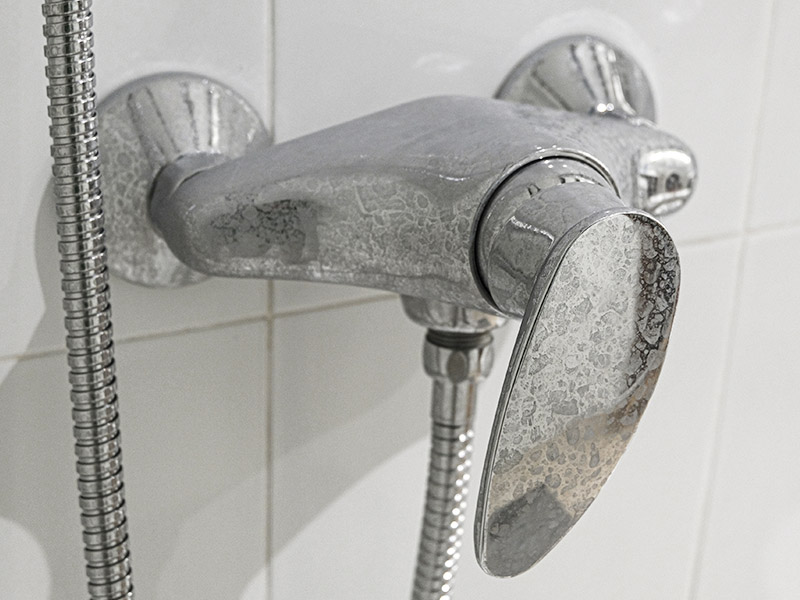
Calcium and magnesium can also react with soap and leave residue on tubs, tile, sinks, and shower doors. If a dull film returns soon after cleaning, hard water may be contributing to the buildup.
Laundry
Hardness minerals can interfere with laundry detergent performance, which may change how your clothes look and feel after washing. Fabrics may feel stiff, whites can appear duller, and colors may seem less vibrant over time.
Adding more detergent doesn’t necessarily solve the problem if hardness minerals are reducing detergent effectiveness. When laundry concerns appear alongside spotting, scale, or poor soap performance, having your water tested can help determine whether hardness is contributing to the issue.
Faucets and Showerheads
Hard water can also affect how your faucets and showerheads perform. Mineral deposits may build up around aerators and spray openings, where they can gradually restrict water flow or cause an uneven spray.
Reduced flow can have other causes, so it shouldn’t be considered proof of hard water by itself. However, when it appears alongside visible scale or recurring white residue, it can be another sign that mineral buildup is affecting your fixtures.
Water-Using Appliances
Hardness minerals can also collect inside coffee makers, kettles, dishwashers, washing machines, and water heaters. Because these appliances regularly heat or move water, mineral deposits may build up over time and affect performance or maintenance needs.
If you’re already seeing hard water signs elsewhere in your home, buildup in appliances adds another clue. Water testing can confirm whether elevated calcium and magnesium levels are contributing to the problem.
When Should You Test Your Water for Hardness?
Testing makes sense when you have a specific reason to question your home’s water hardness. You don’t need to wait until mineral scale becomes severe or starts interfering with everyday cleaning.
Common reasons to test your water include:
- Moving into a new home
- Seeing new or worsening scale
- Relying on a private well
- Considering a water softener
- Noticing several hard water signs at once
Testing can also be useful before you replace an existing water treatment system. Your current water test results should help guide that decision rather than assumptions based on an older system or what works in another home.
If you want to know your actual water hardness level, testing gives you the information you need. That information can then help you decide whether water treatment is necessary and what type of solution may be worth considering.
What to Do After a Hard Water Test
If testing confirms elevated calcium or magnesium levels, your results can help you decide what to do next. The right approach depends on the severity of the hardness, the problems you’re seeing at home, and whether you want to reduce mineral buildup.
Use Your Results to Guide Treatment Decisions
A water softener is one common option for reducing calcium and magnesium, but the right solution depends on your water conditions and household needs. Testing gives you the information needed to compare treatment options and choose equipment based on actual water quality rather than visible symptoms alone.
Manage Mineral Buildup in the Meantime
While you’re considering treatment, a few simple maintenance steps can help reduce visible hard water residue.
You can:
- Dry faucets and shower doors after use
- Clean aerators and showerheads regularly
- Follow appliance care guidance for hard water
Diluted white vinegar may help remove some calcium-based deposits, but acidic cleaners aren’t suitable for every surface. Natural stone, specialty finishes, and certain coatings can be damaged, so always check the manufacturer’s care guidance before using an acidic cleaner.
These steps can help you manage mineral buildup, but they won’t reduce the calcium or magnesium in your water. If you decide to pursue treatment, your water test results can help guide that conversation.
Find Out If Hard Water Is Affecting Your Home
White spots, scale, stubborn soap scum, poor lather, laundry changes, and mineral buildup can all be signs of hard water. When several of these problems appear together, you don’t have to keep guessing about whether water hardness is the cause.
Innovative Water Solutions Laboratory provides professional water testing to help you understand your home’s water quality and hardness level. We give you clear, measurable water test results so you can make informed decisions about your water quality and treatment options.
If you’re tired of dealing with recurring buildup or wondering whether hard water is affecting your home, contact IWSL today. Our team will help you schedule your next water test and get the answers you need.